From Keywords to Conversations: Amazon’s AI-Powered Advertising Revolution
Amazon’s latest advertising updates mark a decisive shift away from traditional keyword-led PPC toward conversational, AI-driven commerce. With the introduction of Sponsored Products and Sponsored Brands prompts, as well as the evolving Sponsored Brands “Collections” format, the platform is redefining how brands influence shoppers at the exact moment of decision.
Advertising Inside The Customer Conversation
At Unboxed 2025, Amazon formally introduced Sponsored Prompts as an AI-powered extension of existing campaigns. But crucially, these are not optimisation tools for advertisers, they are customer-facing ad placements embedded within Amazon’s AI assistant, Rufus.
Sponsored Prompts function as paid, suggested questions that appear during the shopping journey. These prompts are surfaced on product detail pages, in search experiences, and within Rufus conversations, guiding shoppers toward the information they need to convert. For example, a shopper might see a question like “Why choose this product?” or “Does this product reduce frizz?”—and when clicked, Rufus generates a tailored answer, often featuring the advertiser’s product directly within the response.
This is a fundamental shift in ad mechanics. Instead of targeting keywords, brands are now influencing the questions customers ask. Amazon generates these prompts automatically using first-party data, product detail pages, Brand Store content, reviews, and campaign signals, ensuring that the information surfaced is both relevant and conversion-focused.
In effect, Sponsored Prompts act as a “24/7 product expert,” proactively answering shopper questions before they are even asked, and reducing friction at key decision points. This aligns with a broader trend: shoppers are increasingly engaging in conversational discovery rather than traditional search, and Amazon is embedding ads directly into that journey.
Collections Built for Real-Time Shopper Intent
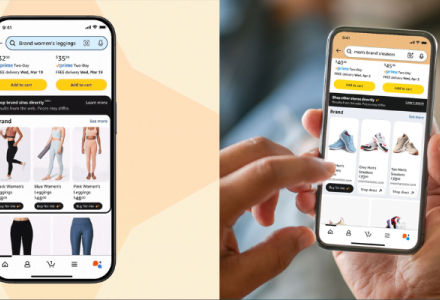
Alongside this, the new Sponsored Brands “Brand Collections” format reinforces Amazon’s move toward automation and personalisation. Replacing the legacy Product Collections workflow, this format allows advertisers to showcase 3–10 ASINs within a single ad unit—either through Manual Collections or AI-driven Auto Collections that dynamically assemble products based on real-time shopper behaviour.
Notably, Amazon is removing the need for custom headlines and lifestyle imagery, instead relying on AI to generate and optimise creative elements. This eliminates production bottlenecks while ensuring messaging adapts to individual shopper context.
Currently these are only available to a subset of advertisers in the US, but phased rollout plans anticipate seeing a broader expansion including more regions soon.
Taken together, these developments highlight Amazon’s ambition to own not just product discovery, but decision-making itself. By embedding paid prompts into conversational interfaces and dynamically curating product collections, Amazon is ensuring that the right information, products, and messaging reach the right customer at precisely the right time.
For brands, the implication is clear: success will increasingly depend on how well product content feeds Amazon’s AI. In this new landscape, optimisation is no longer just about bids and keywords. It’s about shaping the inputs that power AI-driven conversations and, ultimately, conversions.