GAP just changed how people buy online… and most people haven’t clocked it yet
So, Gap Inc. just became the first retailer to launch Instant Checkout inside Google Gemini.
At first glance, it sounds like another AI feature. It isn’t. This is one of those shifts that quietly changes how the whole system works.
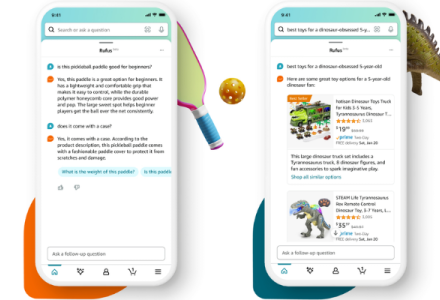
For the first time, you can discover a product, get a recommendation, choose your size, and complete the purchase, all inside a conversation. No website, no app, no marketplace. You ask, the AI decides, and the transaction is done.
That might seem like a small step. It’s not.
From searching to delegating
Online shopping has always been a process. You search, browse, compare, and eventually buy. Everything in ecommerce has been built around improving that journey.
What this changes is your role in it.
Instead of navigating the process, you hand it over. The AI filters options, makes a recommendation, and completes the purchase. It doesn’t just assist, it acts.
That’s the real shift behind “agentic commerce”. And this is one of the first times we’re seeing it fully working end to end.
The funnel doesn’t evolve, it disappears
The industry has spent years optimising the funnel. Better product pages, better conversion, smoother checkout.
But if checkout happens inside Gemini, most of that becomes less relevant.
There’s no real browsing phase. No traditional PDP. No checkout flow to optimise. The journey collapses into a single interaction, with the AI replacing the funnel itself.
Gap hasn’t improved conversion. They’ve removed the steps entirely.
What this really means for brands
This is where the shift becomes more structural.
In a world where AI is making the recommendation, your website matters less. Customers aren’t browsing your brand or exploring your range in the way they used to. Instead, they’re presented with a small number of curated options, often just one or two. If you’re not recommended, you don’t exist.
That changes the role of your “storefront” entirely. It’s no longer your homepage or your product pages. It’s the way your product is understood by the AI.
Your descriptions, your attributes, your reviews, your use cases, how clearly you communicate outcomes, all of this becomes critical. Because that’s what the AI reads. That’s what it compares. That’s what it uses to decide.
In many ways, your product data becomes your storefront.
And as this model develops, the direction is pretty clear. Fewer steps in the journey. Less manual decision-making. More delegation to systems that can interpret intent and act on it instantly.
Which leads to the bigger point.
This isn’t just about a new feature from Gap Inc. inside Google Gemini. It’s an early signal of where commerce is heading.
The shift is moving from: "where people shop" to "who decides what people buy"
And right now, that decision is starting to move to the agents.
Something we’re starting to see more and more is brands asking, “are we actually ready for this?”
Not just in terms of using AI tools, but whether their product data, content, and overall setup are structured in a way that these systems can properly understand and recommend.
This is exactly where we’ve been spending a lot of time with brands, running AI readiness analysis across their catalogue, content, and marketplace presence, to identify where they stand and what needs to evolve.
It’s still early, but the shift is clearly happening. And the brands that start adapting now will be in a much stronger position as this becomes more mainstream.